

Spousal Maintenance in Colorado
Schedule a Free Consultation Today
Spousal Maintenance in Colorado

Spousal maintenance—also called alimony or spousal support—is one of the most impactful and emotionally charged issues in a divorce. Divorce nearly always brings major financial changes for all parties, especially for spouses who have spent years caring for children, managing the household, or supporting the other’s education or career instead of building their own. Maintenance exists to promote fairness when a marriage ends and one spouse is left at a financial disadvantage.
Colorado law recognizes that marriage is an economic partnership, where both spouses contribute to the family’s well-being in different but equally valuable ways. Maintenance helps both spouses make a smoother financial transition after divorce by providing temporary or longer-term support for the spouse who needs time or resources to regain financial stability.
Colorado’s spousal maintenance laws provide a framework for determining when financial support is appropriate after divorce, how maintenance amounts should be calculated, and how long payments should continue. The law also recognizes that each case is unique and provides judges with the discretion to base their decisions on the couple’s specific circumstances rather than a one-size-fits-all formula.
When determining whether maintenance is appropriate, the court looks at various factors, including the length of the marriage, the financial resources and income of each spouse, their reasonable needs, and the standard of living established during the marriage. The goal is to reach an outcome that is fair and equitable for both parties, giving each spouse the best chance to move forward with financial independence and security.
But even when both spouses are trying to be reasonable and fair, maintenance decisions can quickly become complicated, with multiple forms to complete, financial records to gather, and guidelines to interpret. A qualified family law attorney can help you present your finances clearly, understand the arguments and evidence that the court will consider in making its determination, and avoid mistakes that could cost you the support you need or require you to pay more than is appropriate.
In maintenance determinations, small details can significantly sway outcomes. At Fisher & Associates, P.C., our spousal maintenance attorneys can help you translate your day-to-day reality into a well-reasoned maintenance plan. We will help you identify your goals, organize your disclosures, anticipate questions about need and available financial resources, and—where helpful—bring in vocational or financial experts to support your position. We also test settlement options against real budgets so you don’t find yourself agreeing to terms that are not sustainable and won’t meet your long-term needs.
Eligibility for Spousal Maintenance
Eligibility Factors and Judicial Discretion
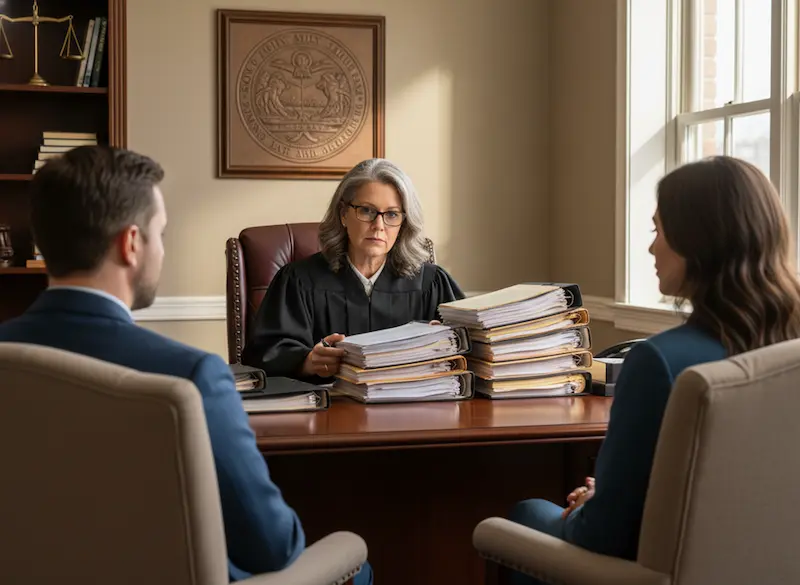
Not every spouse with a lower income will automatically qualify for spousal maintenance in Colorado, even when there is a significant difference in earnings. Under Colorado law, before awarding maintenance, the court must carefully review each spouse’s income, property, and overall financial needs before deciding whether maintenance is truly appropriate. While the state statute governing maintenance awards includes advisory guidelines to help calculate possible maintenance amounts and durations, strict adherence to these guidelines is not required. Instead, judges have the discretion to award maintenance that is fair and equitable to both spouses, based on the unique financial circumstances of the marriage.
In determining the appropriateness of spousal maintenance, the court considers numerous factors including the following:
- Each spouse’s financial situation. The court looks at the income and financial resources of the spouse requesting maintenance, including any income they could earn from their own property or investments, and whether they can reasonably meet their needs on their own.
- The paying spouse’s ability to contribute. Judges also review the income and financial resources of the spouse who would pay maintenance, including income from property or other sources, to make sure that person can meet their own reasonable expenses while still paying support.
- How marital property was divided. The court considers what each spouse received in the property division and whether that distribution reduces or eliminates the need for maintenance.
- Each spouse’s employment and earning potential. The court may consider both parties’ current incomes, job skills, and ability to work, as well as whether additional training or education could help either spouse increase their earning capacity. If one spouse needs to reduce work hours to care for a child or for other legitimate reasons, that factor will also be considered.
- Income history and consistency. The court looks at whether either spouse’s income at the time of the divorce is unusually high or low compared to past earnings and whether overtime or second jobs have been consistent sources of income.
- The lifestyle during the marriage. The standard of living the couple established together helps the court understand their financial expectations and needs.
- The length of the marriage. Longer marriages often mean the spouses’ financial lives are more intertwined, which can affect both the amount and duration of maintenance.
- Age and health. The court considers each spouse’s age and overall health, including any major medical expenses or ongoing care needs that affect their financial situation or ability to work.
- Contributions to the marriage. Both economic and non-economic contributions to the marriage matter—such as helping the other spouse complete an education or job training, paying off the other’s debts, managing the household, or improving marital or separate property.
- Any other relevant circumstances. Finally, the judge can weigh any additional factors that it believes are critical to making a fair and equitable decision.
Assessing Financial Needs and Available Resources
When determining whether spousal maintenance is appropriate, the court will take a close look at each spouse’s overall financial situation — their income, property, and day-to-day living expenses. The goal is to understand what resources each person will have after the divorce and whether one spouse truly needs financial support from the other.

Division of Marital Property
First the court examines how marital property is divided under Colorado’s rules of equitable distribution and how that division impacts the need for maintenance. If one spouse receives enough assets or income-producing property to meet their reasonable needs, ongoing maintenance may not be necessary. For example, a spouse awarded a mortgage-free home or significant investments may be able to rely on those assets for support. But if most of the property awarded isn’t easily converted into income — such as retirement accounts or real estate — the court may still order maintenance to help with immediate living expenses.
Income and Earning Capacity
Next, the judge looks at both spouses’ income and ability to earn in the future. This includes current employment, education, job history, and opportunities for additional training or re-entry into the workforce. If a spouse has been out of work for several years to raise children or support the household, the court may award rehabilitative maintenance for a limited period to allow time for retraining, education, or career rebuilding. The goal is to help that spouse become self-supporting without creating financial hardship in the meantime.
Reasonable Needs
Finally, the court considers each spouse’s reasonable monthly living expenses — things like housing, utilities, transportation, insurance, and other necessary costs. To make fair decisions, judges rely on the financial disclosures required under Colorado law, which obligate both parties to provide complete and accurate information about their income, expenses, assets, and debts. Full transparency is essential; leaving out or misrepresenting information can lead to unfair results, court sanctions, or later changes to the maintenance order once the truth comes to light.
How a Family Law Attorney Can Help
Understanding your financial picture is only the first step in any maintenance determination—presenting it clearly and persuasively to the court is critical to achieving the best outcome. A skilled family law attorney can help ensure that your financial disclosures are complete and accurate, and that your position is presented clearly, effectively and strategically.
At Fisher & Associates, P.C., we guide clients through every aspect of the spousal maintenance process: organizing income documentation, arranging for property or business valuations, evaluating and preparing expense statements, and addressing any disputed figures or other issues well before they become points of contention in the case. We know how to frame your position in a way that supports your goals—whether you’re seeking fair support or defending against an excessive maintenance request. Our team combines legal precision with practical insight, helping you move your case forward with clarity and confidence.
Additional Considerations in Awarding Maintenance
In addition to reviewing each spouse’s income, assets, and expenses, Colorado courts also consider broader factors that reflect the overall fairness of a maintenance award including a spouse’s ability to pay maintenance while still meeting their own financial needs, the standard of living the couple established during the marriage, and the length of the marriage, since longer marriages often involve greater financial interdependence. The court also weighs each spouse’s age, physical and emotional health. Both financial and non-financial contributions to the marriage are recognized as meaningful contributions. Ultimately, the court’s goal is to reach a result that is equitable in light of the marriage as a whole, not just the numbers on a balance sheet.
Ability to Pay
A spouse’s ability to pay is one of the most important factors the court considers when deciding whether to award spousal maintenance. Under Colorado law, judges review each spouse’s gross income and financial resources—including not only what they currently earn but also what they have the capacity to earn based on their education, job skills, and work history. The goal is to reach a result that is fair and realistic for both parties. The court’s decision must ensure that the paying spouse can still meet their own reasonable needs while contributing to the support of the other. Colorado law is designed to prevent maintenance from becoming a hardship for either party; instead, it aims to create balance so both spouses can move forward toward financial independence and security after divorce.
Whether you’re paying or receiving support, at Fisher & Associates, P.C., we will help you advocate for a maintenance figure that works in real life, so the maintenance order entered is sustainable and less likely to require modification or trigger future disputes.
Standard of Living During the Marriage

In deciding spousal maintenance, Colorado courts also consider the standard of living the couple established during the marriage. This means the judge looks at the way the spouses lived—their typical expenses, comforts, and overall lifestyle. The goal isn’t to make both people live exactly as they did while married, but to reach a result that feels fair given the life they built together. When possible, the court tries to ensure that both spouses can maintain a reasonable approximation of their former lifestyle while they work toward separate and stable financial futures.
Duration of Marriage
The duration of the marriage plays an important role in determining both the amount and duration of spousal maintenance. Colorado’s advisory maintenance guidelines apply to marriages lasting at least three years and base the suggested maintenance period to the length of the marriage. In general, the longer the marriage, the more likely it is that one spouse became financially dependent on the other over time. In long-term marriages, one spouse may have sacrificed career growth or retirement savings to support the family, making it harder to regain financial independence after divorce. Judges have the discretion to adjust the recommended maintenance period found in the guidelines when fairness requires—whether the marriage was very short or unusually long—so that the final outcome reflects each couple’s unique financial circumstances.
Age and Health
A person’s age and health are also key factors when a court decides whether maintenance is appropriate and, if so, in what amount. These considerations help the judge assess each spouse’s ability to work, earn income, and manage day-to-day living and other expenses. For example, an older spouse who has been out of the workforce for many years may find it difficult to re-enter their field, while a spouse facing serious or ongoing health conditions might not be able to work full-time or at all. The court takes these realities into account to create a spousal maintenance order that is both fair and practical—one that provides necessary support without creating an unreasonable financial burden on the paying spouse.
Contributions to the Marriage
Colorado law recognizes that both financial and non-financial contributions are valuable in a marriage. In making maintenance awards, judges consider each spouse’s contributions to the marriage, both economic and noneconomic. This can include things like helping a partner complete a degree or job training, paying down the other spouse’s debts, or improving their separate property. It also covers the many unpaid efforts that make family life work—such as raising children, managing the household, and providing emotional and logistical support that allowed the other spouse to build their career. These contributions are weighed alongside income and assets to ensure that maintenance decisions reflect the full picture of what each person brought to the marriage.
Any Other Relevant Factor
Finally, Colorado law also gives judges flexibility to consider “any other factor the court deems relevant” to the award of spousal maintenance. This allows the court to account for unique or exceptional circumstances that don’t fit neatly into the other statutory categories—such as serious medical needs, complex business interests, or major changes in a spouse’s financial situation after separation. This broad discretion ensures that maintenance awards are fair and responsive to the realities of each individual case, rather than limited by a rigid formula.
Because the statute allows judges to weigh “other relevant factors” in making maintenance determinations, thoughtful strategy can greatly influence outcomes. At Fisher & Associates, P.C., we understand that the guidelines are only a starting point for determining the maintenance arrangement that will work for our clients. We will help you examine alternative outcomes—using different maintenance durations and structures—so you can compare options and choose a strategy that aligns with your true financial situation and your individual long-term goals.
Types of Spousal Maintenance in Colorado
Colorado recognizes several types of spousal maintenance, depending on when and why support is awarded. Each type serves a different purpose—some provide short-term stability during the divorce process, while others help a spouse regain financial independence or address long-term financial needs. All maintenance awards are governed by C.R.S. § 14-10-114, which gives judges flexibility to create outcomes that are fair and sustainable for both spouses.

Temporary Maintenance
While a divorce or legal separation is still in progress, the court may order temporary maintenance to help both spouses meet their reasonable living expenses. This support ensures financial stability while the case is pending and allows both people to maintain a basic standard of living until the divorce is finalized. When setting temporary maintenance, the court considers similar financial factors as it does for long-term support—such as each spouse’s income, property, and financial needs. Importantly, a temporary order is just that—temporary. It ends once permanent orders are entered and does not control what the court may decide about ongoing or future maintenance.
Ongoing Maintenance Awarded at the Time of Permanent Orders
At the time of permanent orders—when the divorce decree is finalized—the court may award ongoing maintenance if it finds that support is necessary and appropriate. Before making that decision, the judge must make findings about each spouse’s income, property, financial resources, and reasonable needs, consistent with the spousal maintenance statute. If maintenance is awarded, the amount and duration are determined with reference to Colorado’s advisory guidelines and the factors set out in the statute, including the length of the marriage, the couple’s standard of living, each spouse’s age and health, their earning capacities, and their contributions—both financial and non-financial—during the marriage.
Short-Term or Rehabilitative Maintenance
Rehabilitative maintenance provides short-term financial support to help a spouse gain or rebuild the skills, education, or work experience needed for self-sufficiency. Courts often award this type of maintenance when one spouse has been out of the workforce for several years or gave up career opportunities to raise children or otherwise support the family. The duration of rehabilitative maintenance is tied to the time it will reasonably take for that spouse to complete training, return to work, or otherwise become financially independent.
Long-Term or Indefinite Maintenance
In longer marriages—especially those lasting 20 years or more—the court may consider awarding long-term or indefinite maintenance, particularly if one spouse’s age, health, or limited earning potential makes full financial independence unrealistic. While Colorado’s maintenance guidelines suggest a range of durations, judges have the discretion under the statute to go beyond those ranges when fairness requires it. “Indefinite” does not necessarily mean permanent. Maintenance can still be modified or terminated later if there is a substantial and continuing change in circumstances.
Contractual & Non-Modifiable Maintenance Agreements
Many divorcing couples in Colorado choose to reach their own agreements about maintenance rather than leaving the decision to a judge. Through negotiation, mediation, or the collaborative divorce process, couples can create contractual maintenance agreements that set the amount and duration of support—or waive maintenance entirely. These maintenance agreements can be incorporated into the couple’s separation agreement and so long as the court does not find that the terms agreed to by the parties are unconscionable, the parties’ maintenance agreement can be incorporated into the final divorce decree making it enforceable by all remedies available for the enforcement of a judgment.
Advantages of a Negotiated Agreement
- Control and Predictability – By designing the terms themselves, couples can tailor maintenance to fit their unique financial situation instead of relying on a judge’s interpretation of what they need.
- Privacy – Negotiations happen off the record and outside the courtroom, keeping personal financial information and family matters confidential.
- Flexibility – Spouses can create customized arrangements that suits their individual needs such as step-down schedules, lump-sum payments, or combining property division with ongoing support.
- Reduced Conflict – A cooperative approach can preserve goodwill and promote civil and regular communication between the parties, which is especially important for families with children.
- Lower Cost and Stress – Avoiding costly hearings generally saves both time and money and minimizes the emotional strain that often comes with prolonged court battles.
Non-Modifiable Maintenance Agreements
Colorado law allows spouses to agree that a maintenance award will be non-modifiable, meaning that once it is set, the amount and duration of payments cannot be changed later—no matter whether and to what degree the parties’ financial circumstances change in the future. Parties reaching such an agreement can include a clear statement in their separation agreement that maintenance is contractual and not subject to modification by the court. If approved by the court and incorporated into the final divorce decree, the non-modifiable maintenance agreement becomes binding.
Even when spouses reach their own agreement about maintenance, the court must review it before making it part of the final divorce decree. Under Colorado law, a judge will approve a negotiated maintenance agreement only if it is found to be fair and not unconscionable. This safeguard ensures that both parties understand what they are agreeing to and that neither is placed at an unfair disadvantage. In most cases, judges respect and uphold voluntary agreements—especially when both spouses were represented by counsel and the terms were reached in good faith.
Non-modifiable maintenance agreements offer stability and certainty because both spouses know exactly what to expect going forward. However, they also carry significant risk. If either person later experiences a major change—such as a loss of income, serious illness, or retirement—the court has no authority to revise the terms of the maintenance agreement. Because of that permanence, it’s important for both spouses to fully understand their financial situations and future needs before committing to a non-modifiable maintenance agreement. Legal advice is strongly recommended to ensure that the terms are fair and sustainable over time.
At Fisher & Associates, P.C., our family lawyers know that the specific wording of a maintenance agreement—especially a non-modifiable one—can permanently affect your financial well-being. We negotiate and prepare clear, enforceable support agreements, stress-test any proposals against real budgets and anticipated future needs, and make sure you understand the trade-offs of any maintenance arrangement before you agree and commit to it.
Modifying or Terminating Maintenance
Life doesn’t always go as planned. Even the most carefully crafted maintenance order or agreement may need to be revisited if one spouse’s financial situation changes significantly. Colorado law recognizes this reality and, in most cases, allows spousal maintenance to be modified or terminated when there is a substantial and continuing change in circumstances that makes the existing order inadequate or unfair.
Modification Due to Changed Circumstances
When circumstances change and an existing maintenance order is no longer appropriate, either former spouse can ask the court to modify the amount or duration of spousal maintenance awarded under the existing order.
Common reasons for requesting a modification include:
- A significant increase or decrease in either spouse’s income;
- Job loss or a long-term disability;
- Retirement at a reasonable age;
- Major changes in living expenses or medical costs; or
- The receiving spouse becoming more financially independent, such as by completing school or securing stable employment.
When a modification is requested, the court looks again at many of the same factors considered in the original maintenance order—such as income, health, and financial needs—but focuses on what has changed since that order was entered. The change must be more than temporary or self-inflicted; for example, a spouse cannot intentionally reduce income or leave a job just to avoid paying maintenance. If the court finds that the change in circumstances is both substantial and continuing, it has the authority to increase, decrease, shorten, or extend the maintenance award to restore fairness between the parties.
It’s also important to understand that not all maintenance orders can be modified. If the spouses agreed to a non-modifiable maintenance agreement as part of their divorce (see above), that agreement cannot later be changed—even if one person’s financial circumstances shift dramatically. For this reason, it’s essential to understand whether the maintenance order at issue is in fact modifiable before deciding how and whether to proceed.
The qualified family lawyers at Fisher & Associates, P.C. can help you assess whether a change in circumstances actually meets the legal standard for modification or termination of a maintenance order. We will help you to gather the documents required to support your position for or against the requested change (pay stubs, medical records, retirement documents) and present a clear and concise case to the court as to why a modification of the existing maintenance arrangement is or is not warranted under the circumstances.
Termination of Maintenance
Spousal maintenance is not always permanent. Under Colorado law, unless the parties’ agreement says otherwise, a maintenance obligation automatically ends when either spouse passes away or when the spouse receiving maintenance remarries. This rule ensures that support continues only as long as it remains both appropriate and necessary.
Maintenance can also end if the court determines that continued payments are no longer fair based on major changes in circumstances. For example, support may be terminated if the receiving spouse becomes financially self-sufficient, receives a significant inheritance, or begins living with a new partner in a relationship that provides financial support. In addition, while cohabitation does not automatically end maintenance, Colorado courts have held that cohabitation can be considered when deciding whether to modify or terminate maintenance. If the paying spouse can show that the recipient’s financial need has substantially decreased—for example, because a new partner contributes to household expenses or provides financial support—the court may reduce or end maintenance.
Retirement and Maintenance
Colorado law authorizes modification or termination of maintenance upon “changed circumstances so substantial and continuing as to make the terms unfair”. Retirement routinely qualifies as such a change because it typically causes a material reduction in income. While Colorado law allows modification when there is a substantial and continuing change in circumstances, the specific rules surrounding retirement come largely from decisions by Colorado courts interpreting that standard.
The courts have generally made clear that retirement does not automatically end a maintenance obligation. Instead, judges look carefully at the full financial picture—considering the retiree’s age, health, sources of retirement income, and whether the decision to retire was made voluntarily and in good faith. The court also evaluates the receiving spouse’s financial situation, including their access to retirement accounts, Social Security, or other income sources, to determine what remains fair for both parties.
Colorado courts have also recognized that in long-term marriages, maintenance may continue after retirement if stopping payments would be unfair to the spouse who relies on that support. In other cases, a legitimate, good-faith reduction in income caused by retirement can justify lowering or ending maintenance. The key question is whether the retirement creates a lasting change that makes the original order no longer equitable or sustainable.
Early or Elective Retirement
When a spouse who pays support decides to retire early or leave work by choice, Colorado courts look very carefully at the situation before making any changes to a maintenance order. Retirement can be a valid reason to ask for a modification, but it isn’t automatic. Under Colorado law, any change must be based on a substantial and lasting change in circumstances, and courts have consistently ruled that voluntary income changes — including early or elective retirement — must be made in good faith, not as a way to avoid paying support.
In reviewing these requests, judges look at the whole picture. They’ll consider the retiring spouse’s age, health, career history, financial needs, and reasons for retiring. If the retirement makes sense — for example, due to health problems, the physical demands of a long career, or because it’s a typical retirement age in that field — the court may decide that adjusting maintenance is fair.
However, if the judge finds that the paying spouse could still work and chose to retire mainly to reduce or stop payments, the existing order will likely stay in place. In other words, early retirement isn’t automatically a reason to end or lower support. Colorado courts focus on fairness and financial reality, making sure that both spouses are treated equitably and that any change in maintenance reflects a genuine life transition, not a financial strategy.
If you are considering retirement while paying or receiving spousal maintenance, the lawyers at Fisher & Associates, P.C. can help. Our team will help you evaluate multiple retirement timelines and structures and different income scenarios to anticipate how each of them might affect maintenance needs and requirements. Once we settle on the best strategy to address your individual situation, we will then help you present a detailed evidence-based retirement plan for the court’s consideration.
Enforcement of Maintenance Orders
When a former spouse fails to make court-ordered maintenance payments, it can cause real financial hardship. Colorado law provides several tools to help ensure that maintenance orders are followed and overdue payments are collected. These enforcement measures are not meant to punish but to restore fairness and stability—so that the spouse who depends on support can continue to meet their basic needs.
Court Enforcement Actions
If your former spouse isn’t paying maintenance as ordered, you have the right to ask the court for help. Colorado law gives courts strong tools to enforce maintenance orders, using the same methods available for collecting child support. One of the most effective options is to file a motion for contempt, asking the judge to find that the nonpayment was willful. If the court agrees, it can order immediate payment of what’s owed, require reimbursement of your attorney’s fees, or impose other penalties to ensure compliance.
In serious cases where the court determines that a spouse has the ability to pay but refuses to do so, the judge may even order short-term confinement until the obligation is met. These enforcement actions aren’t meant to punish—they exist to make sure court orders are respected and that you receive the support you’re entitled to.
Automatic Judgments for Missed Payments
Under Colorado law, each unpaid maintenance payment automatically becomes a judgment by operation of law as soon as it is missed. This gives the spouse receiving support the same general enforcement rights as any other creditor—property liens, garnishment of wages or bank accounts, or seizure of assets.
Income Assignments (Wage Withholding Orders)
When support payments are missed, Colorado courts have the authority to issue income-assignment orders, directing an employer to withhold the specified amounts from the paying spouse’s wages. These funds are then forwarded to the receiving spouse directly or, in some cases, remitted to the state’s Family Support Registry. Wage withholding orders may cover both ongoing maintenance payments and also amounts owed for past-due support.
Garnishment and Collection Remedies
Once a missed maintenance payment becomes a judgment, the spouse receiving support can use Colorado’s standard judgement collection procedures to collect past due amounts. These include wage garnishment procedures, bank account levies and even the placement of liens on the paying spouse’s property.
Interception of Tax Refunds and Other Collections
When both child support and spousal maintenance are owed and being enforced through Colorado’s Child Support Enforcement Unit (CSEU), the state can step in to help collect what’s past due by intercepting the paying spouse’s state or federal tax refunds. These funds are applied directly to the unpaid support balance before the refund is released to the taxpayer. This process is usually used when other efforts—like wage withholding or payment plans—haven’t worked. It’s an important enforcement tool that helps ensure families receive the financial support the court has ordered and that they depend on.
Interest and Attorney Fees
Because every missed maintenance payment automatically becomes a judgment under Colorado law, statutory interest begins to accrue from the date the maintenance payment was due until it is fully paid. This means that unpaid support doesn’t simply disappear over time — it grows with interest, ensuring that the spouse entitled to maintenance is fairly compensated for the delay and not left at a financial disadvantage.
In addition, Colorado courts may order the non-paying spouse to cover the reasonable attorney fees and costs incurred by the spouse seeking enforcement. This protection helps maintain balance and fairness, ensuring that the process of enforcing a lawful maintenance order doesn’t create new financial strain for the person relying on that support.
How We Can Help
At Fisher & Associates, P.C., we understand that when maintenance payments stop, speed matters. We will help you file targeted contempt motions, pursue wage withholding where possible, and when appropriate, seek attorney’s fees and interest so that enforcement of your legal maintenance order doesn’t become another financial obligation.
Move Forward With Confidence
Questions surrounding spousal maintenance awards can feel overwhelming. The stakes are high and the outcomes have long-term consequences for both parties. Working with an experienced family law attorney ensures that you understand your rights as either the payor or recipient of maintenance and that your financial stability is both considered and protected at every step of the process.
Accurate Financial Disclosure
Accurate and complete financial disclosure is the foundation of every maintenance case. Colorado law requires full transparency about income, assets, debts, and expenses. Our legal team helps clients prepare detailed financial statements that meet the requirements of Colorado law, ensuring nothing is overlooked. Thorough documentation not only builds credibility with the court but also helps prevent future disputes or modifications based on missing or inaccurate information.
Strategic Advocacy
At Fisher & Associates, P.C., our attorneys combine compassion with precision. We understand that behind every financial statement is a story—years of shared effort, sacrifices, and partnership. Our goal is to help you move forward after your divorce with hope, confidence and a sense of security. Whether you’re seeking maintenance or responding to a maintenance demand, we’ll provide sound analysis and clear guidance enabling you to make informed decisions that safeguard your interests.
Collaboration with Experts
In more complex cases, accurate maintenance determinations often require specialized financial insight. We collaborate with forensic accountants, vocational experts, business appraisers, and tax advisors to ensure that income assessments and valuations are precise and accurate. This multidisciplinary approach strengthens your case, minimizes risk, and supports a fair, fact-based resolution.
Negotiation and Settlement
Whenever possible, we help our clients resolve maintenance issues through negotiation or mediation. A well-crafted agreement negotiated collaboratively allows both spouses to retain control, avoid costly litigation, and move forward more quickly. Collaborative resolutions also preserve goodwill and reduce emotional strain.
When settlement isn’t possible, however, we’re fully prepared to advocate for our clients in court—using strong legal arguments and compelling evidence to achieve a fair and sustainable maintenance outcome.
Modification and Enforcement
We understand that cases do not always end with the final decree. When circumstances change or enforcement becomes an issue, we will help you protect your interests through modification or enforcement actions. Whether your income has changed, your ex-spouse has remarried, or payments have fallen behind, we will help you to ensure that your rights and financial security are protected.
Clarity Begins With A Conversation
If you’re facing divorce or have questions about how spousal maintenance works in Colorado, our compassionate and knowledgeable attorneys are here to help. We understand how stressful and uncertain this process can feel, and we’re committed to guiding you with clarity, skill, and respect every step of the way.
We know that spousal maintenance in Colorado isn’t just about numbers — it’s about fairness, balance, and acknowledging the contributions both spouses made during the marriage. While Colorado law provides a framework for determining maintenance, every family’s financial situation is unique. Outcomes can vary widely depending on each couple’s needs, goals, and life circumstances.
An experienced family law attorney can help you make informed decisions, avoid costly mistakes, and protect your financial future. At Fisher & Associates, P.C., we guide our clients through every step—from gathering accurate financial information and evaluating potential maintenance awards to negotiating fair settlements or presenting strong evidence in court. We take the time to understand your goals and tailor our strategy to achieve the most favorable outcome possible. Whether you are seeking maintenance, responding to a request for support, or seeking to modify an existing order, we provide skilled, individualized representation designed to give you clarity, confidence, and control at every stage of the process.
Contact us today to schedule a confidential consultation. Together, we’ll create a plan that protects your rights, promotes stability, and helps you move forward with confidence and peace of mind.
Questions On Enforcement of Maintenance Orders
Why Choose Us?
Clients choose us because we combine heart with horsepower. We’re known for being approachable, responsive, and relentless in the courtroom.
Experience: Over 15 years of experience helping Colorado families.
Trust: A reputation built on competence, integrity and transparency.
Results: Proven success in both settlement negotiations and trial settings.
Support: Clear communication and steady guidance every step of the way.
We don’t measure success by case volume—we measure it by the families we’ve helped rebuild their lives.
You don’t have to face your family law issues alone. Whether you’re considering divorce, seeking custody, or dealing with financial or safety concerns, Fisher & Associates, P.C. is here to help.
We serve clients across Denver, Boulder, Arapahoe, Jefferson, Adams, Douglas, and surrounding Front Range counties. Our attorneys combine compassion with tenacity to deliver results that protect your future and your family’s well-being.
303-779-5300
At Fisher & Associates, P.C., we don’t just handle cases—we help families find strength, stability, and peace of mind.